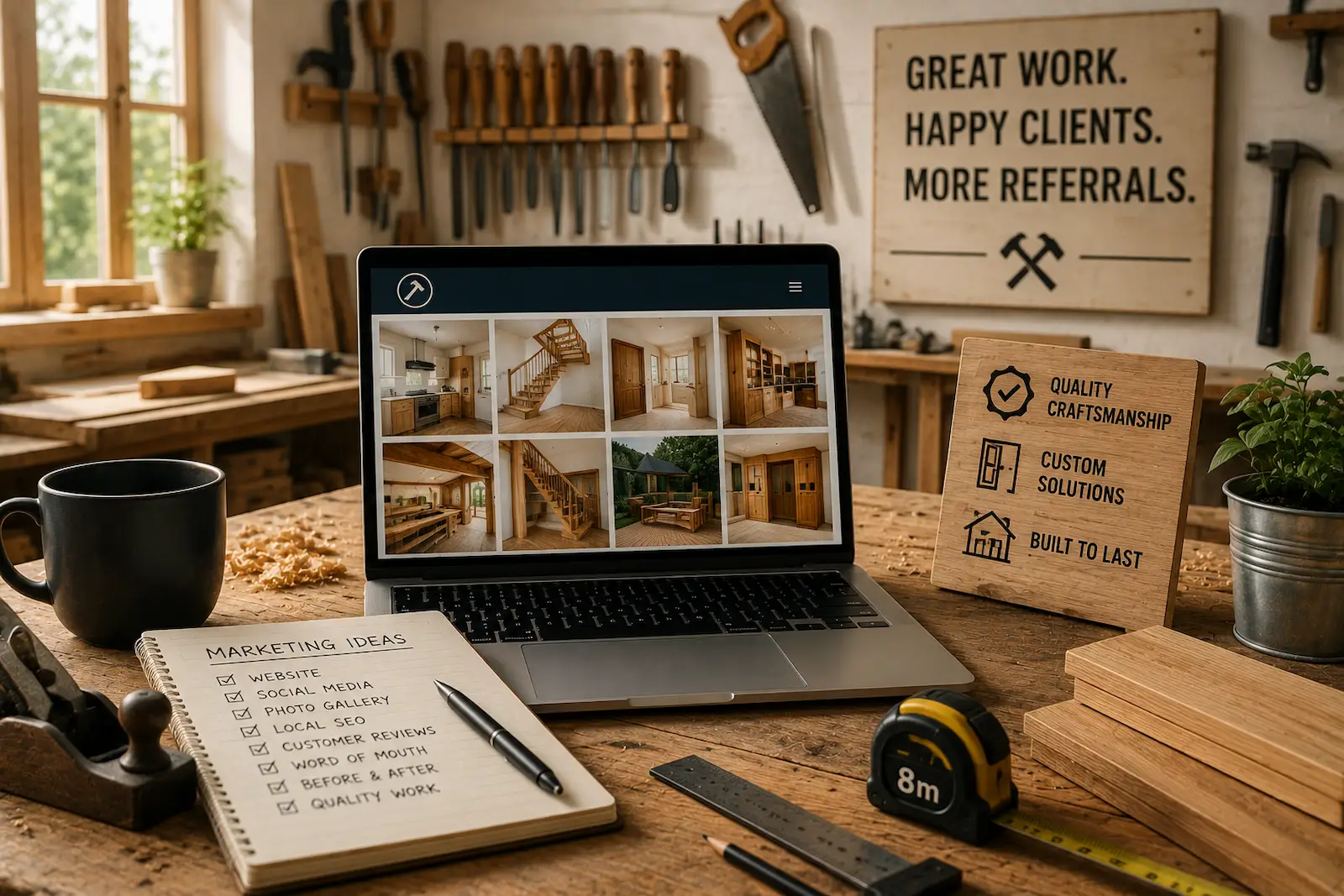
Many carpenters rely on recommendations and repeat customers to keep their business busy.
While referrals are one of the best sources of work, they aren't always consistent. Relying on them alone can make it harder to grow your carpentry business over the long term.
Some months you may have more enquiries than you can handle, while other months can be much quieter.
The most successful carpentry businesses don't rely on one source of leads.
Instead, they build a marketing system that helps customers find them, trust them, and contact them throughout the year.
The good news is that you don't need a huge marketing budget to achieve this.
In this article, we'll explore some of the best marketing ideas for carpenters and explain how each one can help you generate more enquiries and grow your business.
Build a Professional Website
Your website is often the first impression potential customers have of your business.
Whether it's a simple one-page brochure or a multi-page website, if someone is investing in bespoke joinery, fitted wardrobes, or a home renovation, they'll usually research your business before getting in touch.
A professional website should include:
- Services
- Customer reviews
- Project galleries
- Contact forms
- Mobile-friendly design
- Clear calls to action
A good website works as your online showroom and can generate enquiries 24 hours a day. Expanding your website with individual service pages or location pages can further boost the potential reach of your business.
A professional website forms the foundation of your marketing. Learn more in What Makes a Good Trade Website?.
Showcase Your Best Projects
Carpentry is an extremely visual trade.
Customers want to see the quality of your workmanship before they request a quote.
Showing that you can design and build bespoke furniture, fit a kitchen, or repair existing cabinetry helps reinforce confidence in your craftsmanship.
Include high-quality photographs of projects such as:
- Fitted kitchens
- Bespoke wardrobes
- Staircases
- Decking
- Garden rooms
- Timber flooring
- Shelving and storage
- Home offices
The more examples customers can see, the easier it becomes for them to trust your skills. Just make sure to use examples of your own work and not stock imagery found online, as that will have the opposite effect and reduce trust.
Use Before-and-After Photos
Transformation photos are incredibly effective for carpenters.
People love seeing how a space has been transformed, and it also helps potential customers visualise what you can achieve.
Examples include:
- Built-in storage
- Kitchen renovations
- Timber flooring
- Staircase upgrades
- Garden structures
Before-and-after galleries often generate more engagement than finished photos alone. For customers unsure about renovating their kitchen, seeing examples of your work and the transformation of a space can help inspire them to move forward with their own project.
Invest in Local SEO
Most carpenters work within a specific geographic area.
Local SEO helps your business appear when nearby customers search Google.
Examples include:
- Carpenter near me
- Carpenter in Location A
- Joiner in Location B
- Bespoke furniture maker in Location C
Unlike paid advertising, strong local SEO can continue generating enquiries long after the initial work has been completed.
Learn more in Why Local SEO Matters for Tradespeople.
Optimise Your Google Business Profile
Your Google Business Profile is one of your most valuable marketing tools.
A complete profile should include:
- Accurate contact information
- Business hours
- Service areas
- Customer reviews
- Project photos
- Website link
Keeping your profile updated helps improve visibility in Google Search and Google Maps.
Collect Google Reviews
Positive reviews help customers feel confident about hiring your business.
Seeing others who have had good experiences reinforces confidence in your workmanship while also supporting your local SEO efforts.
Ask satisfied customers to leave a review after each completed project.
Leaving a business card or sending a follow-up message to gently request a review is considered good practice.
Over time, these reviews become one of your strongest trust signals. Responding to reviews in a professional manner also demonstrates that your business values its customers' opinions.
Create Individual Service Pages
Avoid putting every service on one page.
Instead, create dedicated pages for services such as:
- Bespoke Furniture
- Kitchen Fitting
- Door Installation
- Decking
- Fitted Wardrobes
- Staircases
- Timber Flooring
- Home Renovations
This helps both customers and Google understand what you offer. It's much better for a potential customer to land on a page dedicated to the specific service they're interested in than to scroll through a long list of unrelated services.
Target the Areas You Serve
If you work across several towns or areas, create location-specific pages.
Examples include:
- Carpenter in Location A
- Carpenter in Location B
- Carpenter in Location C
- Carpenter in Location D
These pages help improve local SEO and increase your visibility for nearby customers.
This helps ensure the enquiries you receive come from customers in the areas you actually serve.
It's far from ideal to receive multiple enquiries from potential customers located hundreds of miles away.
Start a Carpentry Blog
Publishing helpful articles can bring additional traffic to your website.
Ideas include:
- How Much Do Fitted Wardrobes Cost?
- Solid Wood vs MDF
- Best Timber for Outdoor Decking
- How to Maintain Hardwood Flooring
- Kitchen Renovation Tips
Useful content builds trust while helping your website rank for more search terms. Someone who discovers your blog posts might also end up hiring you for their own carpentry needs.
Publishing useful content is one of the reasons SEO becomes more valuable over time. Read How Tradespeople Can Generate Leads Without Paid Ads.
Use Social Media to Showcase Your Craftsmanship
Carpentry naturally lends itself to visual platforms.
Share:
- Finished projects
- Before-and-after transformations
- Time-lapse videos
- Workshop content
- Customer testimonials
Consistent posting helps keep your business visible and reinforces your expertise. Customers like to see that your business is active. Regular updates reinforce trust and show that you're consistently completing quality work.
Build a Strong Brand
Professional branding helps customers remember your business.
Keep your branding consistent across:
- Website
- Vans
- Workwear
- Business cards
- Quotes
- Social media
A recognisable brand helps create a more professional impression. Many excellent carpenters don't invest much in branding, but a recognisable brand can help customers remember your business and distinguish you from local competitors.
Using your branding across multiple channels also presents your business in a clear and professional manner.
Strong branding works best when combined with a consistent marketing strategy. Read Best Marketing Ideas for Tradespeople.
Respond Quickly to Enquiries
Many customers contact multiple carpenters before choosing one.
Responding quickly can significantly improve your chances of winning the work.
Aim to:
- Return calls promptly
- Reply to emails quickly
- Follow up on quote requests
- Keep communication professional
Fast responses build confidence. Missed calls are missed opportunities, and failing to return them means those enquiries often become someone else's jobs.
Encourage Referrals
Happy customers are often happy to recommend a carpenter they trust.
At the end of a successful project, simply let customers know you'd appreciate any recommendations.
Even when someone is referred to your business, they'll often search for you online before making contact, making a professional website and strong reviews just as important.
Keep Updating Your Portfolio
Don't let your website become outdated.
Every completed project is an opportunity to add new photos, publish another case study, or share content on social media.
A regularly updated portfolio shows that your business is active and experienced. Even taking time to update your gallery or portfolio on a monthly basis helps both customers and Google see that your business is active and continuing to deliver quality work.
Common Marketing Mistakes Carpenters Make
Many carpenters:
- Have outdated websites
- Rarely update their portfolio
- Ignore SEO
- Don't collect reviews
- Depend entirely on referrals
- Post inconsistently on social media
Avoiding these mistakes can significantly improve your lead generation. Whether you manage these tasks yourself or outsource them, having a well-managed website and a clear marketing strategy can pay dividends over the long term.
Final Thoughts
The best marketing strategy for carpenters combines several approaches rather than relying on just one.
By investing in:
- Local SEO
- A professional website
- Google reviews
- Project galleries
- Helpful content
- Strong branding
you can build a marketing system that consistently generates enquiries.
The goal isn't simply to get more visitors to your website.
It's to build trust, demonstrate the quality of your work, and make it easy for customers to choose your business.
Over time, these small improvements compound, creating a reliable source of enquiries and helping your carpentry business grow without relying solely on referrals.
If you're looking for even more practical ways to generate enquiries, read Best Ways to Get More Leads as a Tradesperson.