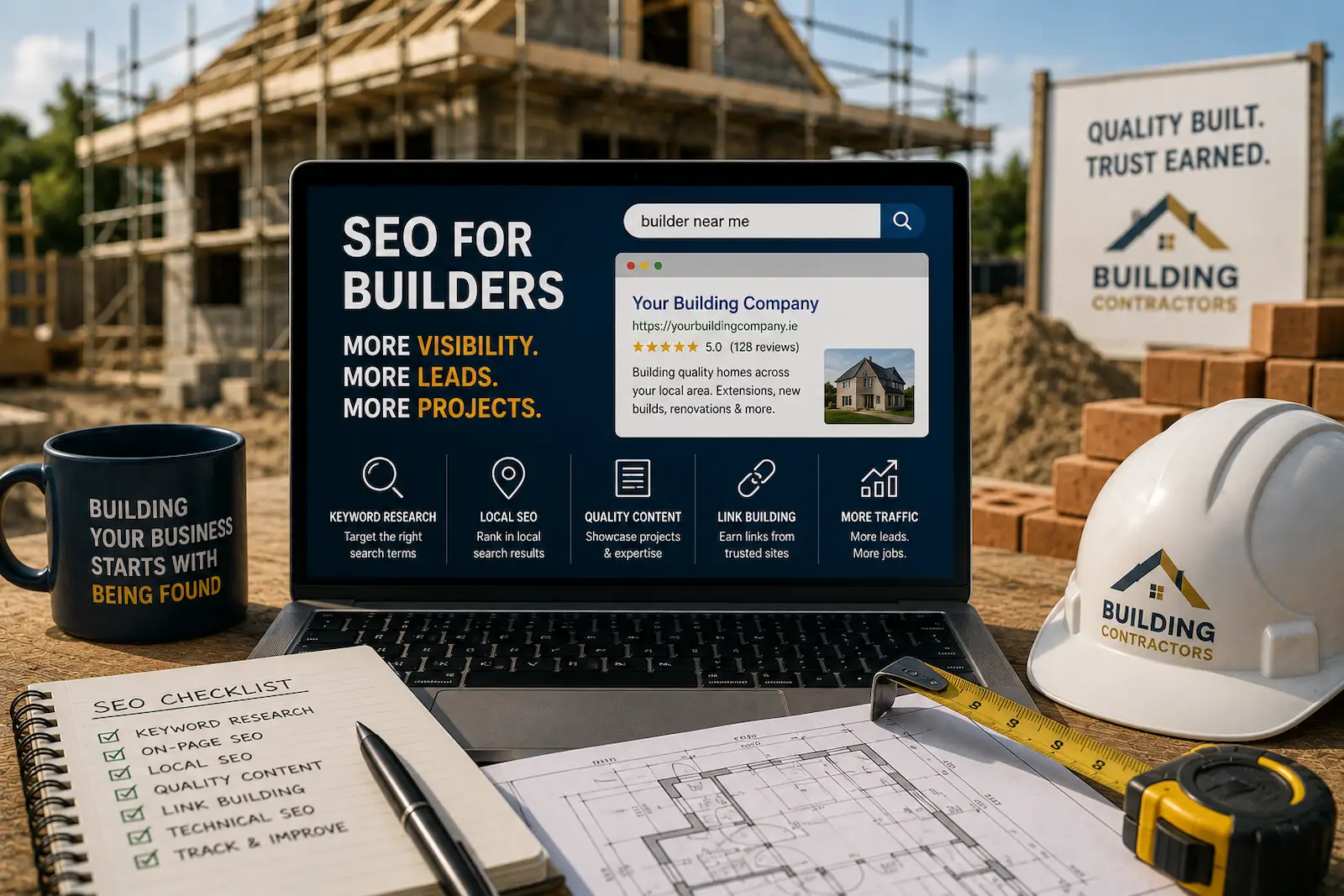
Many builders know they should be appearing on Google, but understanding SEO and how to improve their rankings can seem complicated.
There are technical terms, marketing jargon, and countless opinions about what works. In our experience, many builders are left wondering, "Where do I even begin?"
In reality, the goal of SEO is quite simple. SEO focuses on helping people find your building business when they're searching for the services you offer.
Whether someone searches for:
- Builder near me
- House extension builder
- Builder in specific location
- Home renovation contractor
you want your business to appear near the top of the results.
The higher your website ranks, the more likely people are to visit it and enquire about your services.
In this article, we'll explain SEO for builders in simple terms and show you how it can help grow your business.
What Is SEO?
SEO stands for Search Engine Optimisation.
It involves improving your website so search engines understand:
- What services you provide
- Where you work
- Why customers should choose you
- Who you are
The better Google understands your business, the more likely it is to recommend your website to potential customers. SEO includes many different factors that work together to improve your visibility in Google's search results.
Why SEO Matters for Builders
Building projects are often major investments. From the perspective of the client, choosing a contractor is something worth spending time researching. They often compare several contractors before making a decision, choosing the business that appears the most trustworthy and professional.
They compare:
- Websites
- Reviews
- Previous projects
- Experience
- Services
If your business isn't visible online, you may never get the opportunity to provide a quote.
SEO helps put your business in front of people who are already looking for a builder.
Generating more enquiries doesn't rely on SEO alone. Read Best Ways to Get More Leads as a Tradesperson to discover additional lead generation strategies.
Local SEO Is the Foundation
Most builders work within a particular town or region.
That's why local SEO is so important.
Instead of targeting broad searches like:
- Builder
you should aim to appear for searches such as:
- Builder in Location A
- House Extension Builder in Location B
- Builder in Location C
- Renovation Contractor in Location D
These local searches often generate highly qualified enquiries. Ultimately, you want enquiries from homeowners in the areas you actually serve—not people hundreds of miles away.
Optimise Your Google Business Profile
Your Google Business Profile plays a major role in local SEO.
When people search for builders, Google often displays local businesses in a map before the normal search results.
Many businesses fail to understand the value of an optimised Google Business Profile. It should include:
- Business information
- Opening hours
- Service areas
- Photos
- Customer reviews
- Website link
Keeping your profile accurate and active helps improve both visibility and trust. Keeping your profile complete and regularly updated improves both your local Google rankings and the way potential customers perceive your business.
Your Google Business Profile works best when it's supported by a professional website that showcases your services and previous work. Learn more in What Makes a Good Trade Website?.
Create Individual Service Pages
Many builders list every service on a single page.
This is an acceptable method, however a business website with separate pages for each service you offer is far more likely to improve user experience, and in turn help bring in enquiries.
Examples include:
- House Extensions
- Home Renovations
- New Builds
- Loft Conversions
- Garage Conversions
- Structural Alterations
- Commercial Building Services
Dedicated pages give Google a better understanding of your expertise and allow you to target more search terms. It also allows a potential customer to immediately discover the service they are looking for instead of scrolling through a list of different, unrelated services. This often improves both user experience and conversion rates.
Create Service Area Pages
Similar to service pages, if your business covers multiple locations then create a page for each one.
Examples include:
- Builder in Location A
- Builder in Location B
- Builder in Location C
- Builder in Location D
These pages increase your chances of appearing in local search results and help customers confirm that you work in their area.
Showcase Your Previous Projects
Building is one of the most visual trades. It can instantly show a potential client the level of workmanship your business offers.
Customers want to see examples of your work before they contact you, so on your Google Business Profile and builder website ensure you include project galleries featuring:
- House extensions
- Renovations
- New builds
- Kitchen remodels
- Commercial projects
Add a short description explaining what the project involved and the outcome.
This helps build trust while also adding valuable content to your website. Every project page adds useful content to your website while giving potential customers more confidence in your workmanship.
Project galleries don't just build trust—they also strengthen your SEO by adding valuable content to your website. Learn more in Why Builders Need a Professional Website.
Collect Google Reviews
Reviews are an important part of builder SEO.
They show potential customers that other homeowners trust your business.
Positive reviews can also improve your visibility in local search results.
Make it part of your process to ask satisfied customers for a review after each completed project.
Responding to reviews, even negative ones, shows that your business cares about the opinions of your customers and always strives to provide the highest quality of work.
Publish Helpful Content
A blog can help builders attract people who are researching projects before requesting quotes.
Useful topics include:
- How Much Does a House Extension Cost?
- Do I Need Planning Permission?
- How Long Does a Home Renovation Take?
- New Build vs Extension
- Common Building Mistakes to Avoid
Helpful articles build authority and create more opportunities to appear in Google search results. If someone finds the answer to their question, it can encourage them to contact your business regarding their project.
Ensuring your posts are relevant and genuinely helpful is also extremely important, as homeowners are looking for clear answers, not complicated industry jargon.
Make Sure Your Website Is Mobile Friendly
Many customers search for builders using their phones.
Your website should:
- Load quickly
- Display correctly on all screen sizes
- Include click-to-call buttons
- Make it easy to request a quote
A fast, mobile-friendly website improves both user experience and SEO. This is one technical area where many builder websites fall short, and it can negatively impact your Google rankings.
SEO Takes Time
SEO isn't an overnight solution. This is one of the biggest misconceptions tradespeople have when investing in a website.
It usually takes several months before you begin seeing significant improvements.
However, unlike paid advertising, the benefits can continue long after the work has been completed.
As you add:
- More service pages
- New project galleries
- Blog articles
- Customer reviews
your website becomes stronger and more visible over time. Small improvements over time help keep your website looking active, which in turn builds trust with potential customers.
This long-term approach is one of the biggest advantages of SEO. Learn more in How SEO Can Pay for Itself for Trades Businesses.
Common SEO Mistakes Builders Make
Many builders struggle to rank because they:
- Ignore local SEO
- Have outdated websites
- Don't collect reviews
- Use only one generic service page
- Never update their content
- Have slow-loading websites
Addressing these issues can significantly improve your online visibility. A builder website is a long-term investment, as is SEO.
What Does Good Builder SEO Look Like?
A strong SEO strategy for builders usually includes:
- A professional website
- Google Business Profile optimisation
- Individual service pages
- Service area pages
- Customer reviews
- Project galleries
- Helpful blog content
- Fast website performance
Together, these elements help attract more local customers. You don't need to implement everything on day one. Slowly improving your SEO strategy depending on your available budget and investment capability can be just as effective. The key is to continue investing for the long term.
Final Thoughts
SEO doesn't need to be complicated.
For builders, it's simply about making it easier for local customers to find your business online.
By investing in:
- Local SEO
- A professional website
- Google reviews
- Project galleries
- Helpful content
you make it easier for local homeowners to discover and trust your business.
Over time, these improvements can generate more enquiries, build trust, and help your business grow without relying solely on referrals.
If you're looking to improve your overall online presence, read Why Local SEO Matters for Tradespeople for a broader guide covering local SEO across every trade.
FAQ
What is SEO for builders?
SEO for builders is the process of improving your website and online presence so your building business appears higher in Google search results.
How can builders improve SEO?
Builders can improve SEO by optimising their Google Business Profile, creating service and location pages, collecting reviews, publishing helpful content, and maintaining a fast website.
Is local SEO important for builders?
Yes. Most builders work within a specific geographic area, making local SEO one of the most effective ways to attract nearby customers.
How long does builder SEO take?
SEO usually takes several months to gain momentum, but it can provide long-term visibility and consistent enquiries.
Does SEO generate more building enquiries?
Yes. A well-executed SEO strategy helps your business appear when homeowners are actively searching for building services, increasing the likelihood of receiving enquiries.