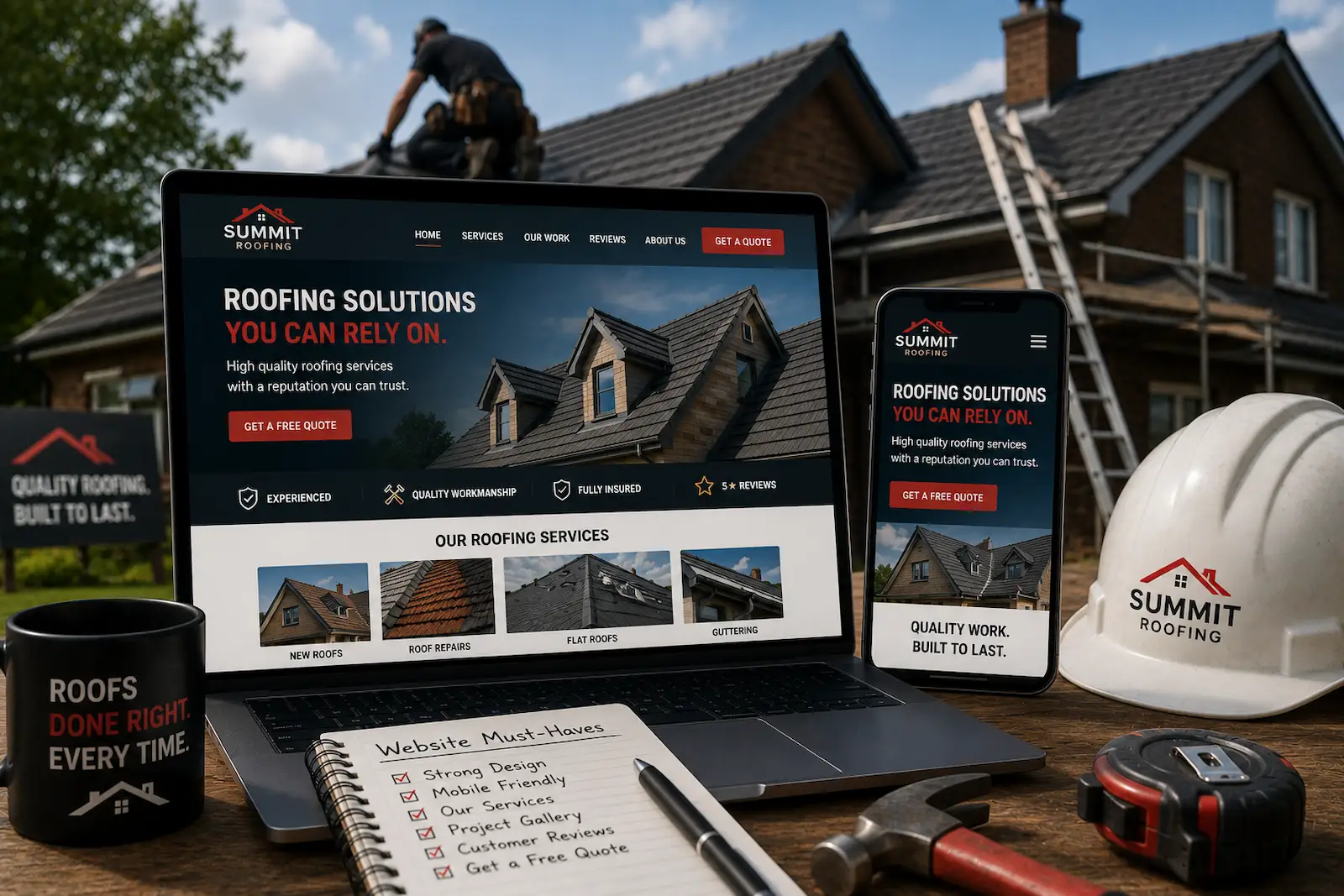
A roofing website has one main job:
Turn visitors into enquiries.
It should help potential customers understand what you do, trust your business, and contact you without having to search through half the website for a phone number.
That sounds simple.
Yet many roofing websites are outdated, difficult to use, or missing the information customers actually need.
A homeowner with a leaking roof is unlikely to admire your creative navigation menu for very long. They want to know whether you can help, whether you're reliable, and how quickly they can reach you.
In this article, we'll explore the best website features for roofers and explain how each one can help generate more local leads.
A Clear Homepage
Your homepage should immediately explain:
- What roofing services you provide
- Where your business operates
- Why customers should choose you
- How visitors can contact you
Avoid vague headlines that could belong to any business.
For example:
Reliable Roofing Services Across Local Area
is much clearer than:
Building Better Futures Together
The second one sounds impressive, but it could describe a roofer, a bank, or a motivational seminar.
Clarity wins.
A Prominent Phone Number
Many roofing enquiries are urgent.
Customers may be dealing with:
- Storm damage
- Roof leaks
- Missing tiles
- Gutter problems
- Water entering the property
Your phone number should be easy to find on every page.
Make sure it's visible in:
- The website header
- The mobile navigation
- Calls to action
- The contact page
- The website footer
On mobile devices, make the number clickable so visitors can call immediately.
A Simple Quote Request Form
Not every visitor wants to phone.
A short quote form gives customers another easy way to make contact.
Keep the form short. Useful fields include:
- Name
- Phone number
- Email address
- Location
- Type of roofing work
- Brief project description
Keep the form straightforward.
Customers shouldn't feel as though they're completing a planning application just to ask about a roof repair.
Individual Roofing Service Pages
Each major service should have its own page.
Examples include:
- Roof Repairs
- New Roof Installation
- Flat Roofing
- Gutter Repairs
- Chimney Repairs
- Storm Damage Repairs
- Roof Inspections
- Commercial Roofing
Individual pages make it easier for visitors to find relevant information.
They also help search engines understand the services your business provides.
Learn why dedicated service pages are so valuable in Why Roofing SEO Can Be Extremely Valuable.
Emergency Roofing Information
If you provide emergency roofing services, make this obvious.
Include:
- A visible emergency call button
- The areas you cover
- Your typical availability
- Types of emergencies you handle
- What customers should do before you arrive
This helps people act quickly during stressful situations.
Avoid promising response times you cannot consistently deliver.
Honest expectations build far more trust than unrealistic promises you'll struggle to keep.
A Project Gallery
Roofing is a visual trade.
Customers want to see proof that you've completed projects similar to theirs before they decide to get in touch.
A strong gallery might include:
- Full roof replacements
- Flat roof installations
- Slate and tile roofing
- Chimney repairs
- Gutter replacements
- Before-and-after projects
Use genuine photographs from your own work whenever possible.
Stock images may look polished, but they don't demonstrate your actual workmanship.
Before-and-After Photos
Before-and-after images help customers understand the transformation.
They are especially useful for:
- Damaged roofs
- Moss-covered roofing
- Flat roof replacements
- Chimney restoration
- Fascia and soffit upgrades
- Gutter replacement
The finished result matters, but showing where the project started makes the improvement far more convincing.
Customer Reviews
Roofing projects are often a significant investment, so customers want reassurance before choosing a contractor.
Display genuine reviews throughout the website, not only on one testimonial page.
Reviews can be placed near:
- Service descriptions
- Project galleries
- Quote forms
- Calls to action
The most useful reviews mention specific details such as communication, reliability, cleanliness, or the quality of the finished work.
Looking for more ways to attract enquiries? Read How Roofers Can Get More High-Value Leads.
Trust Signals
Customers need to feel confident that they're dealing with a legitimate and professional business.
Useful trust signals include:
- Insurance information
- Trade qualifications
- Industry memberships
- Workmanship guarantees
- Years of experience
- Manufacturer certifications
- Genuine customer ratings
Only display qualifications, memberships, or guarantees that your business genuinely holds.
Trust signals work best when they're specific and verifiable.
Clear Service Areas
Your website should clearly state where you work.
List the main towns, cities, counties, or regions you cover.
For example:
- Location A
- Location B
- Location C
This helps customers quickly confirm that they're within your service area.
It also supports local SEO by giving search engines a clearer understanding of where your business operates.
Location Pages
If your business covers several important areas, dedicated location pages can help you appear in more local searches.
Examples include:
- Roofers in Location A
- Roofers in Location B
- Roofers in Location C
- Roofers in Location D
Each location page should contain useful, original information.
Avoid creating dozens of nearly identical pages where only the town name changes. Search engines and customers are surprisingly good at spotting copy-and-paste content.
A Mobile-Friendly Design
Many customers will visit your website from a phone.
This is particularly likely during urgent situations when someone notices a leak or storm damage.
Your mobile website should have:
- Large, readable text
- Simple navigation
- Clickable phone buttons
- Fast-loading pages
- Easy-to-use forms
- Clearly visible calls to action
If visitors have to zoom, scroll sideways, or tap the same button five times, they may give up and contact another roofer.
Mobile-friendly websites don't just improve the user experience—they can also help generate more enquiries. Learn why in Why Mobile-Friendly Websites Matter for Tradespeople.
Fast Loading Speeds
A slow website creates a poor first impression.
Large, unoptimised project photos are a common cause of slow roofing websites. They're one of the easiest performance problems to fix.
Improve performance by:
- Compressing images
- Using modern image formats
- Removing unnecessary plugins
- Choosing reliable hosting
- Keeping the design efficient
A fast website is easier for customers to use and can also support better search visibility.
Strong Calls to Action
Every important page should tell visitors what to do next.
Examples include:
- Request a Free Quote
- Call for Emergency Roof Repairs
- Book a Roof Inspection
- Discuss Your Roofing Project
Calls to action should be clear and specific.
A button labelled Submit is functional.
A button labelled Request Your Roofing Quote is much more useful.
An About Page
Customers often want to know who they're hiring.
People prefer doing business with people, not anonymous logos.
Your About page can explain:
- How long the business has operated
- Who runs the company
- Your roofing experience
- The standards you work to
- The areas you serve
- What customers can expect
Including genuine photographs of the team, vehicles, or people behind the business can make the company feel more approachable.
Roofing FAQs
An FAQ section can answer common questions before customers contact you.
Useful questions include:
- How much does a roof repair cost?
- Do you provide free quotations?
- How long does a roof replacement take?
- Can you repair storm damage?
- Do you work on flat roofs?
- Are your roofing services insured?
- Which areas do you cover?
Helpful answers reduce uncertainty and can encourage more visitors to enquire.
Helpful Roofing Content
Publishing useful articles can support your SEO and help customers make informed decisions.
Potential topics include:
- Signs Your Roof Needs Repair
- How Long Does a Roof Last?
- Flat Roofing Options Explained
- What to Do After Storm Damage
- How Much Does a New Roof Cost?
- When Should Gutters Be Replaced?
These articles can attract people during the research stage and introduce them to your business before they're ready to request a quote.
Contact Details That Match Everywhere
Your business information should remain consistent across:
- Your website
- Google Business Profile
- Social media
- Online directories
- Trade platforms
Use the same business name, phone number, and contact details wherever possible.
Consistent information helps customers and supports local SEO.
A Privacy Policy and Secure Website
A professional roofing website should use HTTPS so customer details are protected.
It should also include relevant legal pages, such as:
- Privacy Policy
- Cookie Policy
- Terms and Conditions
These pages may not generate roofing enquiries directly, but they help the website feel legitimate and responsibly managed.
Features Roofers Should Avoid
More features don't always create a better website.
Roofers should be cautious about:
- Autoplaying music
- Large pop-ups covering the screen
- Complicated animations
- Excessive text
- Fake countdown timers
- Stock photographs pretending to be real projects
- Forms asking for too much information
Your website should feel clear, trustworthy, and easy to use.
It doesn't need to behave like a theme park ride.
Simple almost always beats clever.
Where Should Roofers Start?
If you're improving a roofing website gradually, start with the features that are most likely to influence enquiries:
- A visible phone number
- Clear roofing service pages
- A simple quote form
- Genuine customer reviews
- Real project photographs
- Mobile-friendly design
- Clear service areas
- Strong calls to action
These features create a strong foundation before you add more advanced content.
Final Thoughts
The best roofing websites don't rely on clever design alone.
They give customers the information and reassurance needed to make contact.
A strong roofing website should:
- Clearly explain your services
- Demonstrate your workmanship
- Show genuine customer feedback
- Establish trust
- Work properly on mobile devices
- Make requesting a quote simple
Potential customers are often comparing several roofing businesses.
The website that provides the clearest information and creates the most confidence is more likely to receive the enquiry.
Your website doesn't need every feature imaginable.
It needs the right features, presented clearly, with no leaks in the customer journey.
That is one roofing problem you can fix without climbing a ladder.
A great website is only one part of growing your roofing business. Read Why Roofing Companies Need Strong Branding to learn how a strong brand helps you stand out from the competition.