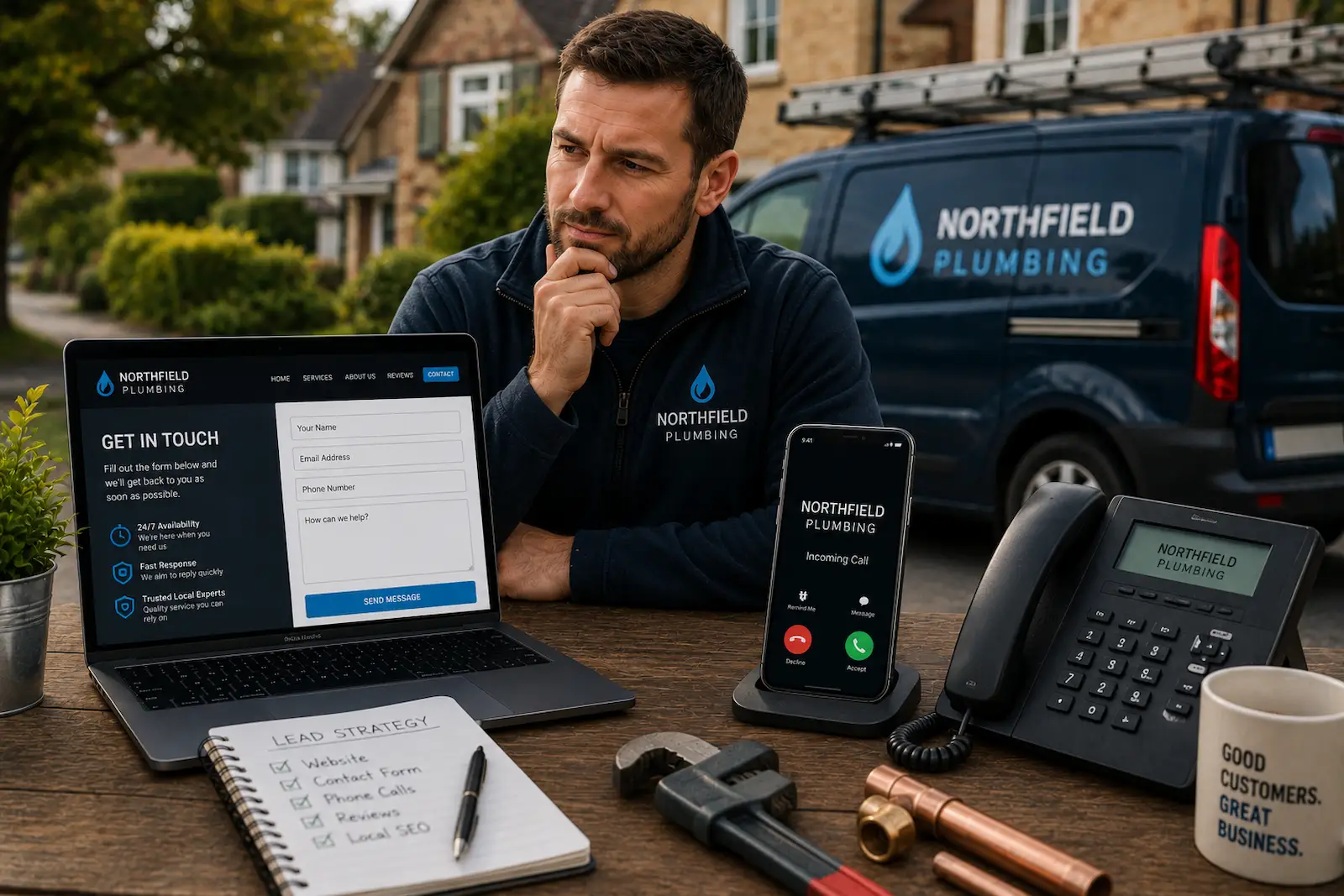
If you're building a new trade website, one question usually comes up quite quickly:
Should customers call you, or should they fill out a contact form?
Some tradespeople prefer phone calls because they're immediate.
Others like contact forms because they can reply when they have time.
The truth is that neither option is perfect on its own.
Customers contact businesses in different ways depending on the type of job, the urgency, and even the time of day.
The best trade websites don't force visitors into one method.
They make it easy for customers to choose the option that suits them.
Every extra way a customer can contact you is another opportunity to generate an enquiry.
In this guide, we'll compare phone calls and contact forms, explain when each works best, and show why most trades businesses benefit from offering both.
Why Some Customers Prefer to Call
For many people, picking up the phone is still the quickest way to get an answer.
This is especially true for urgent work such as:
- Roof leaks
- Burst pipes
- Electrical faults
- Boiler breakdowns
- Emergency locksmith services
Customers often want reassurance immediately.
Speaking to a real person builds confidence and allows questions to be answered straight away.
It also gives customers the chance to judge whether they feel comfortable dealing with you before arranging the work.
Advantages of Phone Calls
Phone calls offer several benefits.
They allow you to:
- Build rapport quickly
- Qualify the job immediately
- Answer questions in real time
- Arrange site visits faster
- Reduce unnecessary back-and-forth messages
For emergency work, a phone call is almost always the preferred option. The client has the ability to describe their emergency while the tradesperson can gather as many details as required.
The Downsides of Phone Calls
Phone calls aren't perfect.
As a tradesperson, you're often:
- On-site
- Driving
- Meeting customers
- Working with tools
- Quoting another job
You can't always answer immediately.
Missed calls can easily become missed opportunities if customers simply move on to the next business.
Having a simple system for returning missed calls as quickly as possible greatly increases the chances of winning that enquiry.
Why Contact Forms Are Valuable
A contact form allows customers to get in touch whenever it's convenient.
Whether it's:
- Early in the morning
- During work
- Late in the evening
- At the weekend
they can send an enquiry without waiting for office hours.
Your website continues collecting enquiries even when you're busy.
A well-designed contact page is only one part of an effective website. Learn more in Best Website Features for Tradespeople.
Advantages of Contact Forms
Contact forms can:
- Capture leads outside working hours
- Collect useful project information
- Reduce interruptions during the day
- Create a written record of enquiries
- Help organise quote requests
For planned projects such as extensions, kitchens, landscaping, or bathroom renovations, forms often work very well.
The Downsides of Contact Forms
Forms also have limitations.
Customers may become frustrated if:
- The form is too long.
- They don't receive a reply.
- They aren't sure whether the message was sent.
- They need an urgent answer.
Long forms asking for unnecessary information can discourage enquiries.
If requesting a quote feels harder than completing a tax return, many visitors simply won't bother!
Keep the form concise and only ask for information that genuinely helps you understand the enquiry. Requiring just a name and either a phone number or email address usually creates far less friction than asking customers to complete a lengthy questionnaire.
Different Customers Have Different Preferences
People don't all communicate in the same way.
Some customers will always call.
Others actively avoid phone conversations whenever possible.
Younger homeowners may prefer filling out a form or sending an email.
Older customers may feel more comfortable speaking directly.
Providing both options allows customers to contact you in the way they prefer.
Different Jobs Need Different Contact Methods
The type of work also matters.
Phone calls are often best for:
- Emergency plumbing
- Roof leaks
- Electrical faults
- Heating breakdowns
- Urgent repairs
Contact forms often work well for:
- Kitchen renovations
- Garden landscaping
- House extensions
- Fitted furniture
- Bathroom renovations
- New-build projects
Planned work usually involves more information and allows customers a little more time.
The most important thing is making it easy for customers to start the conversation. Whether that begins with a phone call or a contact form matters far less than making the first step simple.
Keep Contact Forms Simple
Many trade websites ask far too many questions.
Stick to the essentials.
A simple contact form usually converts better than a complicated one.
Only ask for information that genuinely helps you understand the enquiry.
Additional details can always be discussed later.
It also reduces any hesitation potential customers may have about getting in touch. Many can get frustrated if they are required to complete numerous fields within a form.
Simple forms are just one example of good website design. Learn more about building a better trade website in What Makes a Good Trade Website?.
Make Your Phone Number Easy to Find
If customers want to call, don't make them hunt for your number.
Display it:
- In the website header
- On every service page
- In the footer
- On the contact page
- Beside your quote buttons
On mobile devices, make the number clickable.
Reducing friction can increase the number of enquiries.
Respond Quickly—Whichever Method They Choose
The contact method matters less than the response time.
If someone phones and never receives a callback, they'll probably contact someone else.
If someone submits a contact form and hears nothing for three days, the result is much the same.
Aim to:
- Return missed calls promptly.
- Reply to forms on the same day where possible.
- Confirm you've received enquiries.
- Keep customers informed.
Fast communication creates a strong first impression.
Think About Life on Site
Most tradespeople spend the day working rather than sitting behind a desk.
That's exactly why contact forms are so useful.
Someone can submit an enquiry while you're installing a kitchen, rewiring a house, or laying a patio.
You can review the information properly once you're available instead of trying to balance a phone between your shoulder and a spirit level.
Combine Contact Forms With Click-to-Call Buttons
The best solution isn't choosing one or the other.
It's providing both.
A professional trade website should include:
- A visible phone number
- Click-to-call buttons
- A simple contact form
- Email details if appropriate
This gives customers flexibility while increasing the number of ways they can contact you.
Don't Forget Mobile Users
Many customers visit trade websites from their phones.
Your contact options should be easy to use on smaller screens.
Make sure:
- Buttons are large enough to tap.
- Forms are mobile-friendly.
- Phone numbers are clickable.
- Contact information is clearly visible.
A poor mobile experience can cost enquiries before you've even had the chance to speak to the customer.
Most customers now search for tradespeople on their phones, making mobile usability more important than ever. Learn more in Why Mobile-Friendly Websites Matter for Tradespeople.
Track Which Method Generates More Leads
It's worth monitoring how customers contact you.
You might discover:
- 70% arrive through phone calls.
- Most landscaping enquiries use forms.
- Emergency jobs usually come by phone.
- Larger renovation projects often start online.
This information helps you improve your website over time.
Tracking this data helps you improve the parts of your website that generate the most enquiries.
Tracking your enquiries also helps you identify which customers are the best fit for your business. Learn more in What Makes a High-Quality Trade Lead?.
Common Mistakes Tradespeople Make
Many businesses unintentionally lose enquiries because they:
- Only offer one contact method.
- Hide their phone number.
- Use long, confusing forms.
- Ignore missed calls.
- Take too long to reply.
- Don't test their forms regularly.
- Forget about mobile users.
Fortunately, these are all relatively easy problems to fix.
So... Which Is Better?
For most trades businesses, the answer is simple:
Neither.
Phone calls and contact forms solve different problems.
Calls provide speed and reassurance.
Forms provide convenience and flexibility.
The strongest trade websites recognise that customers are different and allow them to choose the contact method they prefer.
The strongest lead generation strategies combine a great website with long-term marketing. Learn more in How Tradespeople Can Generate Leads Without Paid Ads.
Final Thoughts
If your goal is to generate more enquiries, don't make customers adapt to your preferred communication style.
Instead, make contacting your business as easy as possible.
A professional trade website should offer:
- A clearly visible phone number
- Click-to-call functionality
- A simple contact form
- Fast responses
- Mobile-friendly contact options
Most customers don't care whether they contact you by phone or through a form—they simply want a quick and convenient way to get in touch.
After all, the hardest part of winning a new customer shouldn't be finding your phone number.
Making it easy for customers to contact you is just one part of generating more enquiries. Learn more in How Tradespeople Can Get More Customers.